Simplifying padel bookings before trying to run the whole club.
Volea is a SaaS product that brings a padel club's availability, requests and bookings into one place — a simple experience for the people running the club day to day.
The opportunity was in an everyday task
In the clubs I looked at, the booking process still ran on WhatsApp, phone calls and separate tools.
From how clubs handled their day-to-day scheduling and what solutions already existed, I found an opportunity around one of the most frequent tasks in the operation: organizing availability and bookings.
More than adding features, the challenge was finding an entry point concrete enough to build and validate a first version of the product.
Not trying to solve everything from the start.
A platform for clubs could quickly expand into customers, payments, staff, analytics and plenty of other areas of club management.
But trying to solve all of it in the first version made it harder to tell which part of the product actually created value.
So I narrowed the initial scope and made bookings the core of the MVP, building the rest of the product around that main flow.
Narrowing the scope didn't mean lowering the ambition of the product. It meant choosing which problem to solve first.
CustomersPaymentsStaffAnalytics…
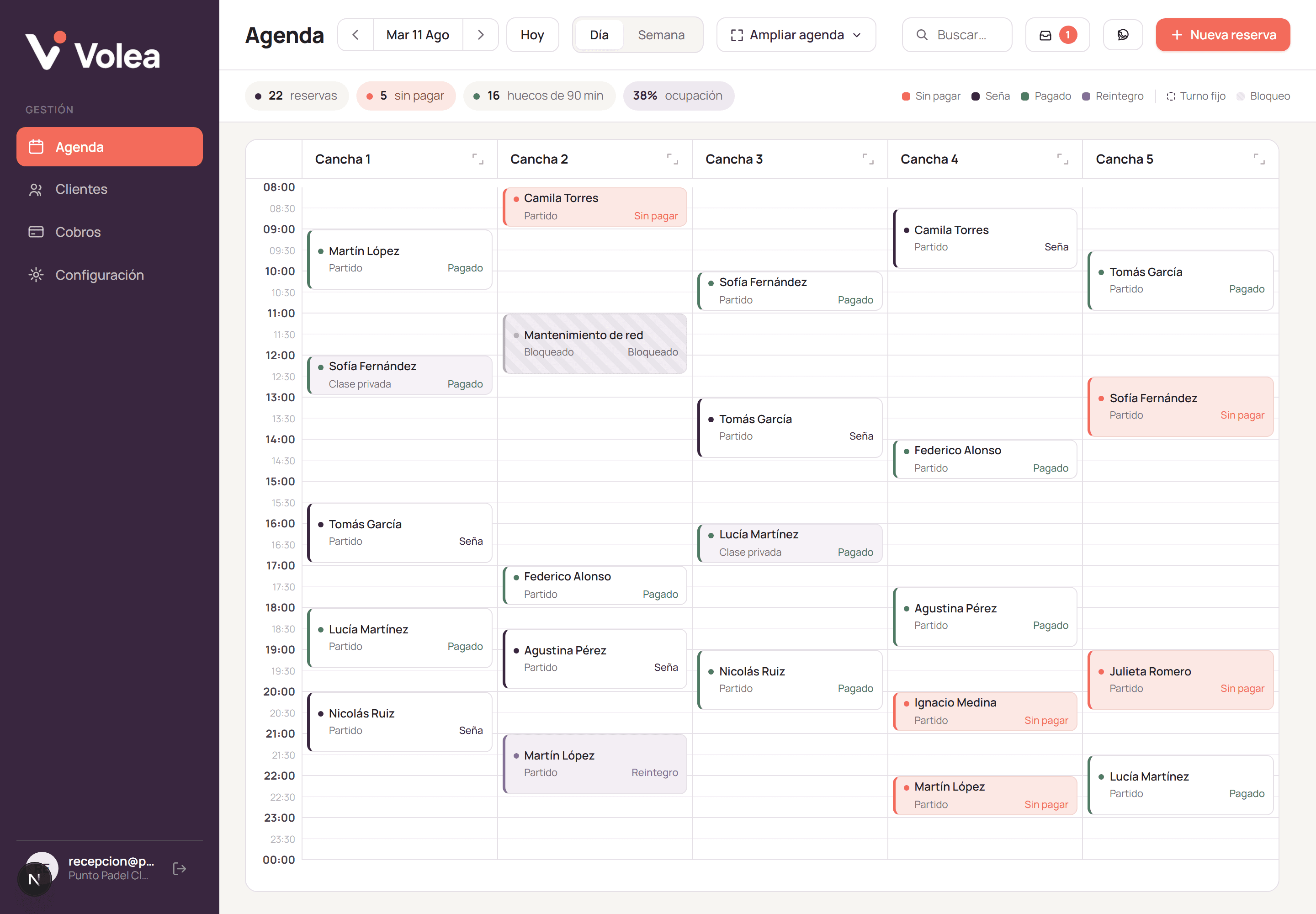
A schedule you can read and act on
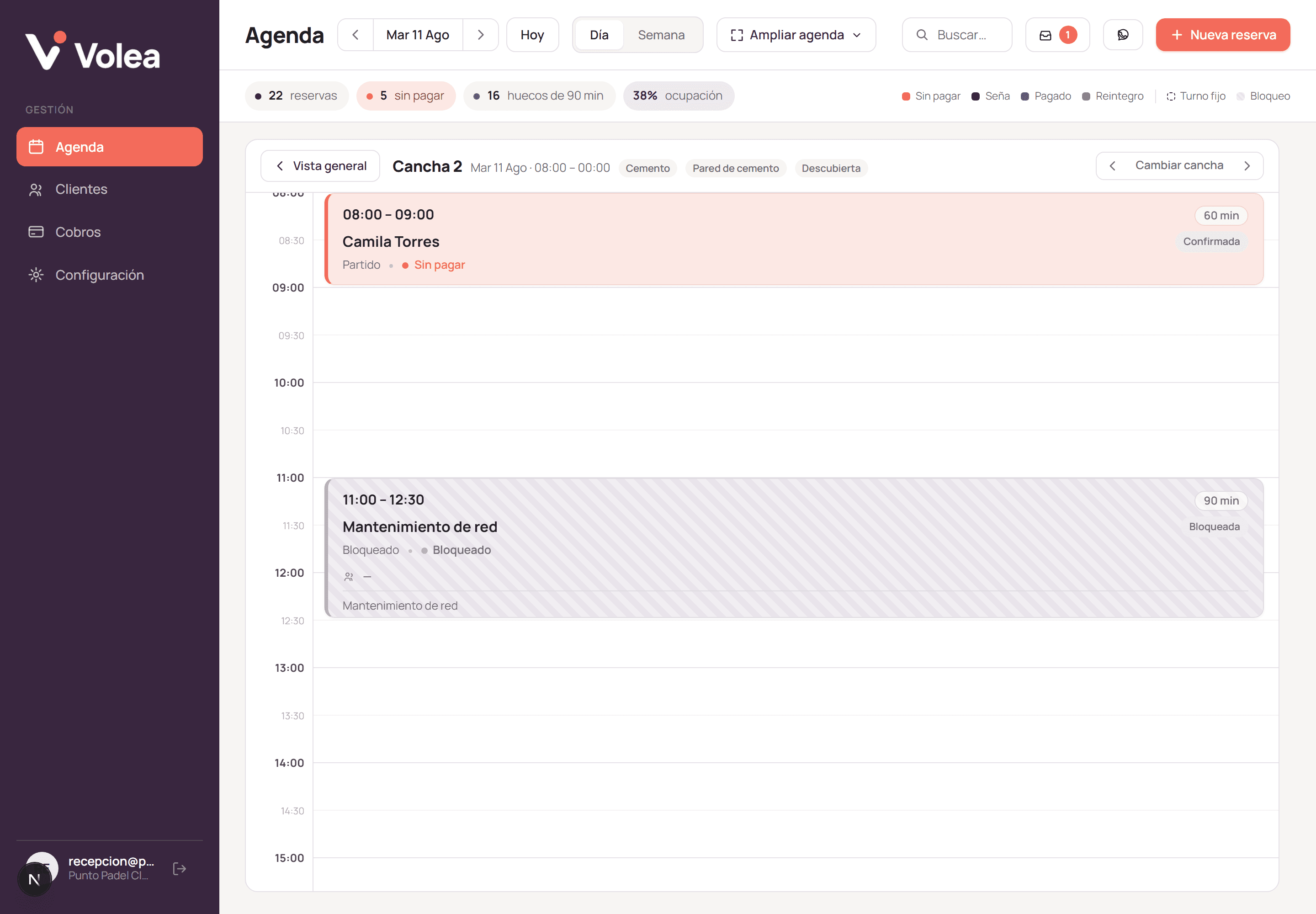
The schedule is the center of the internal experience. From one view, whoever is running the club can see how the courts are filling up, tell booking states apart and reach the actions attached to each slot.
Instead of splitting information across several screens, I made sure the most frequent tasks could be handled without losing the context of the day's operation.
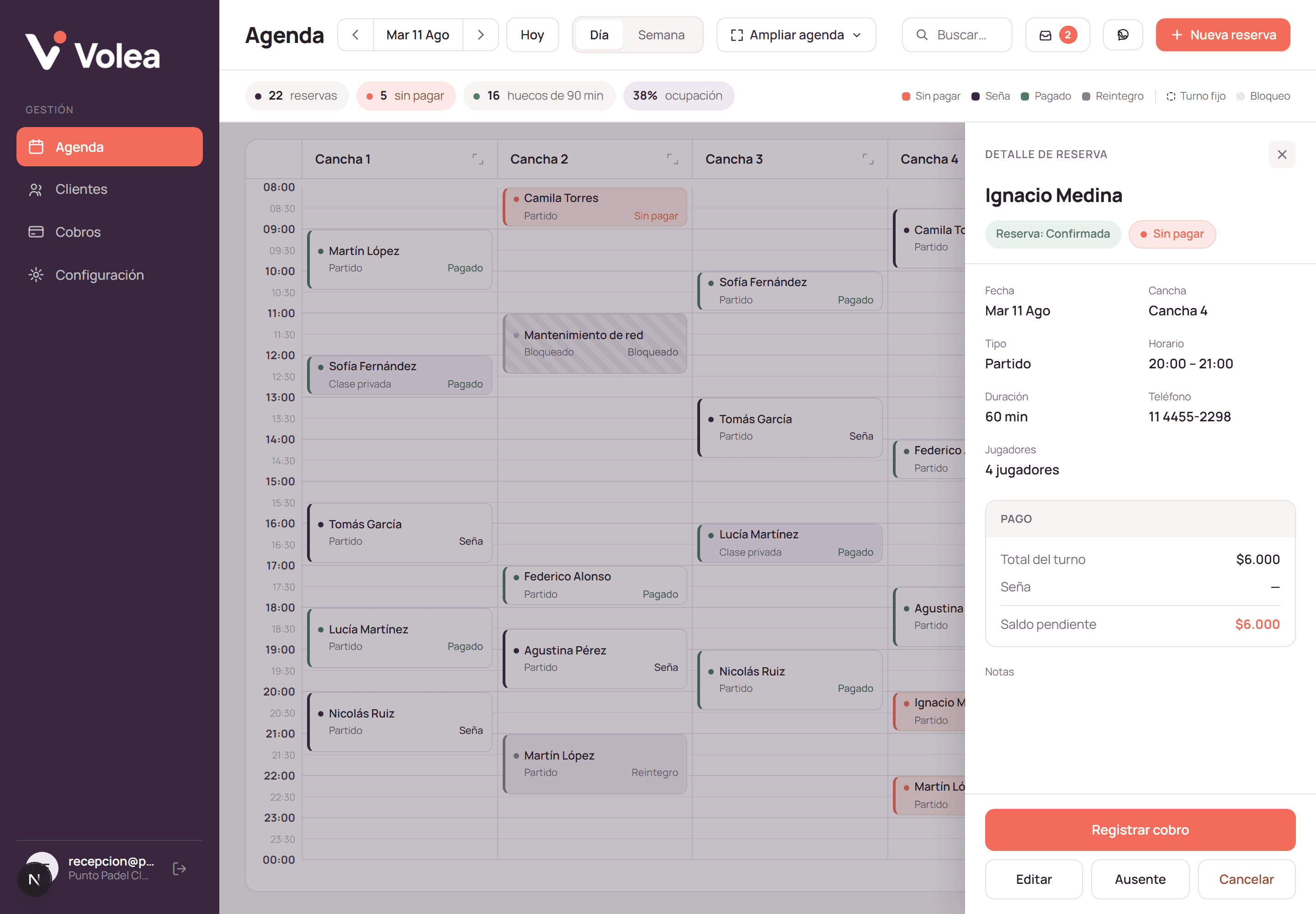
- Booking status
- Payment information
- Actions without losing context
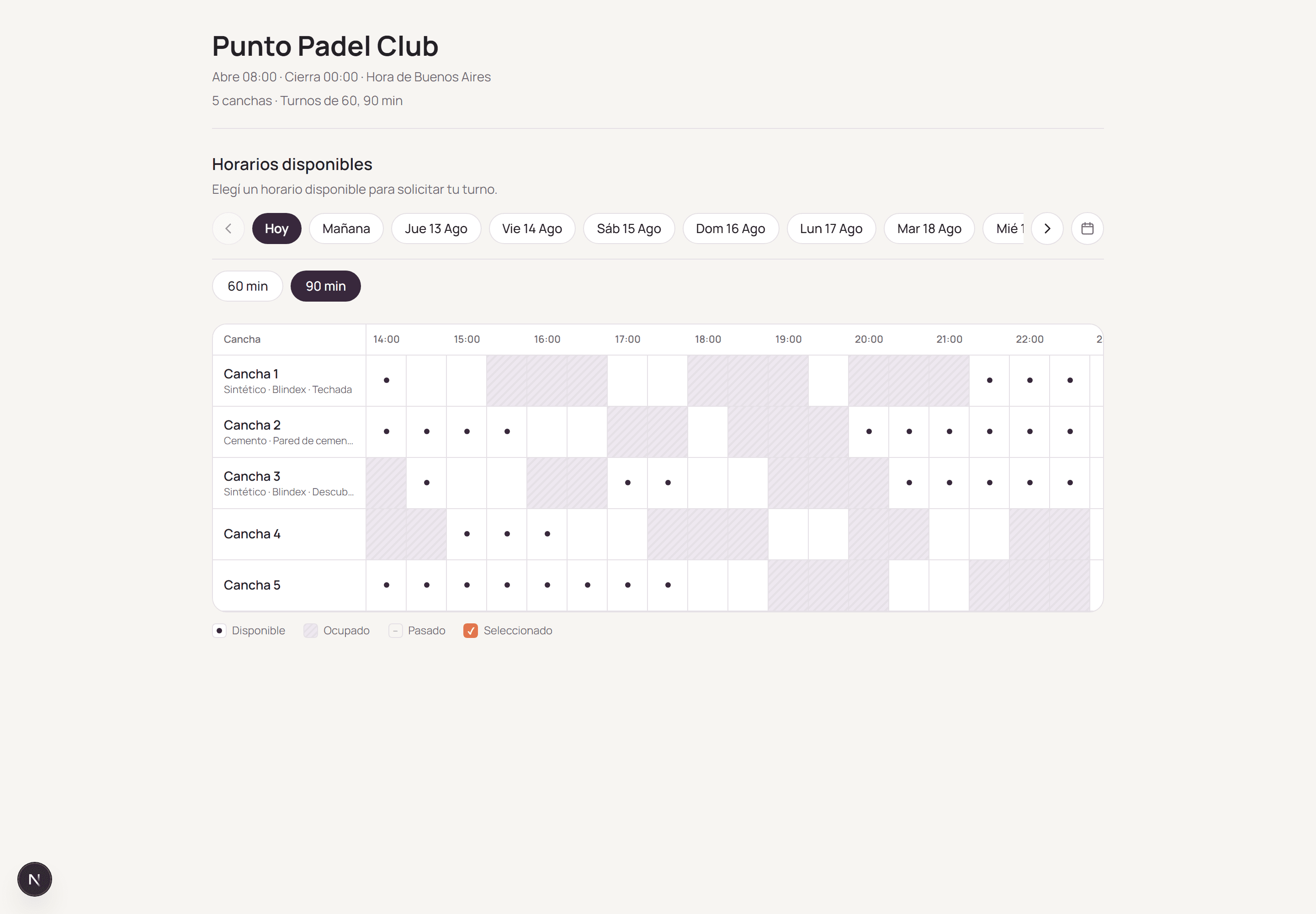
The experience doesn't end at the admin panel
Volea also connects the availability the club manages with a public experience where a player can check open times and request a booking.
Both sides of the system work off the same availability, without turning the player's experience into another management tool.
- Availability
- Player requests
- Club receives
- Booking confirmed
Availability
Player requests
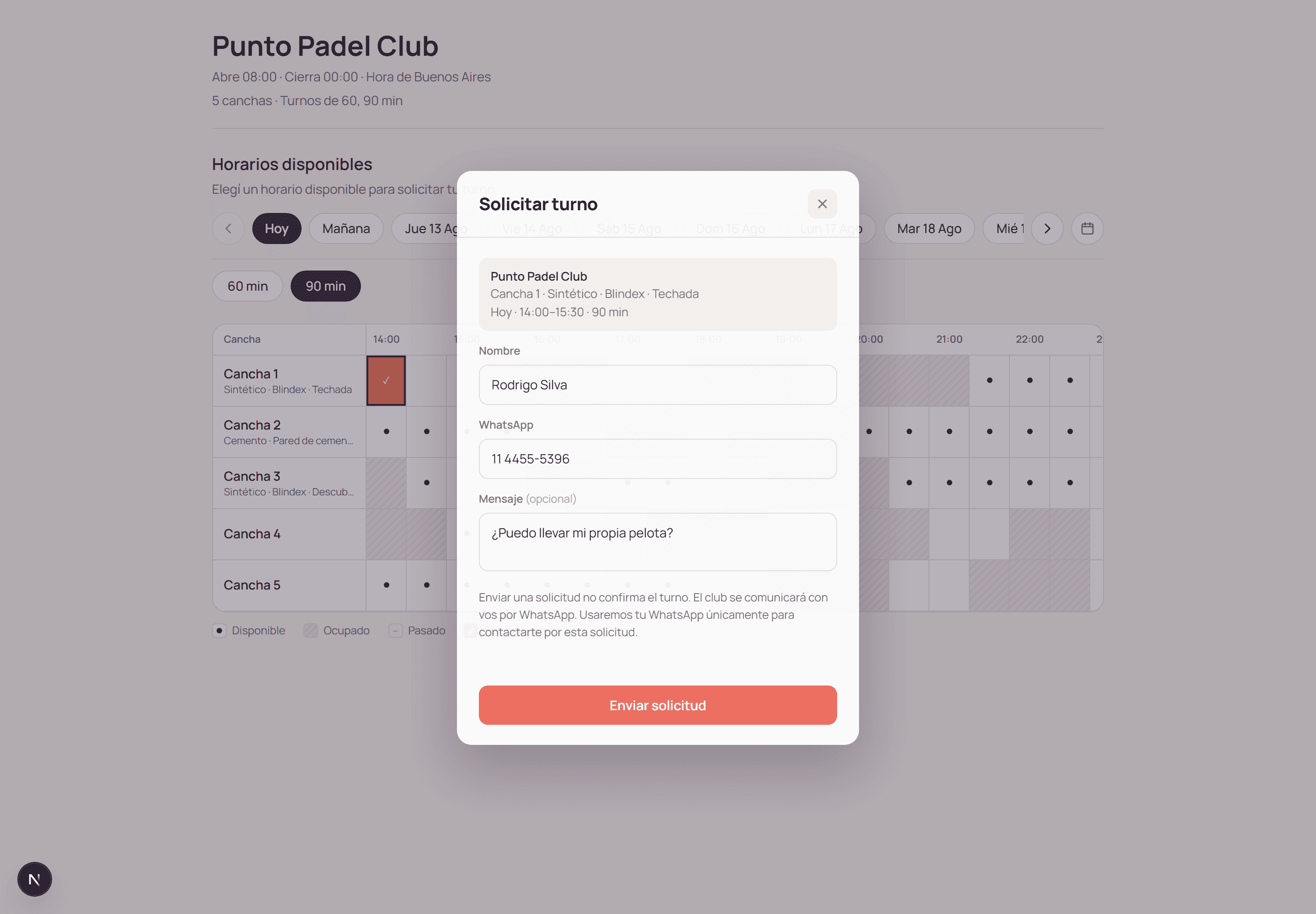
Club receives
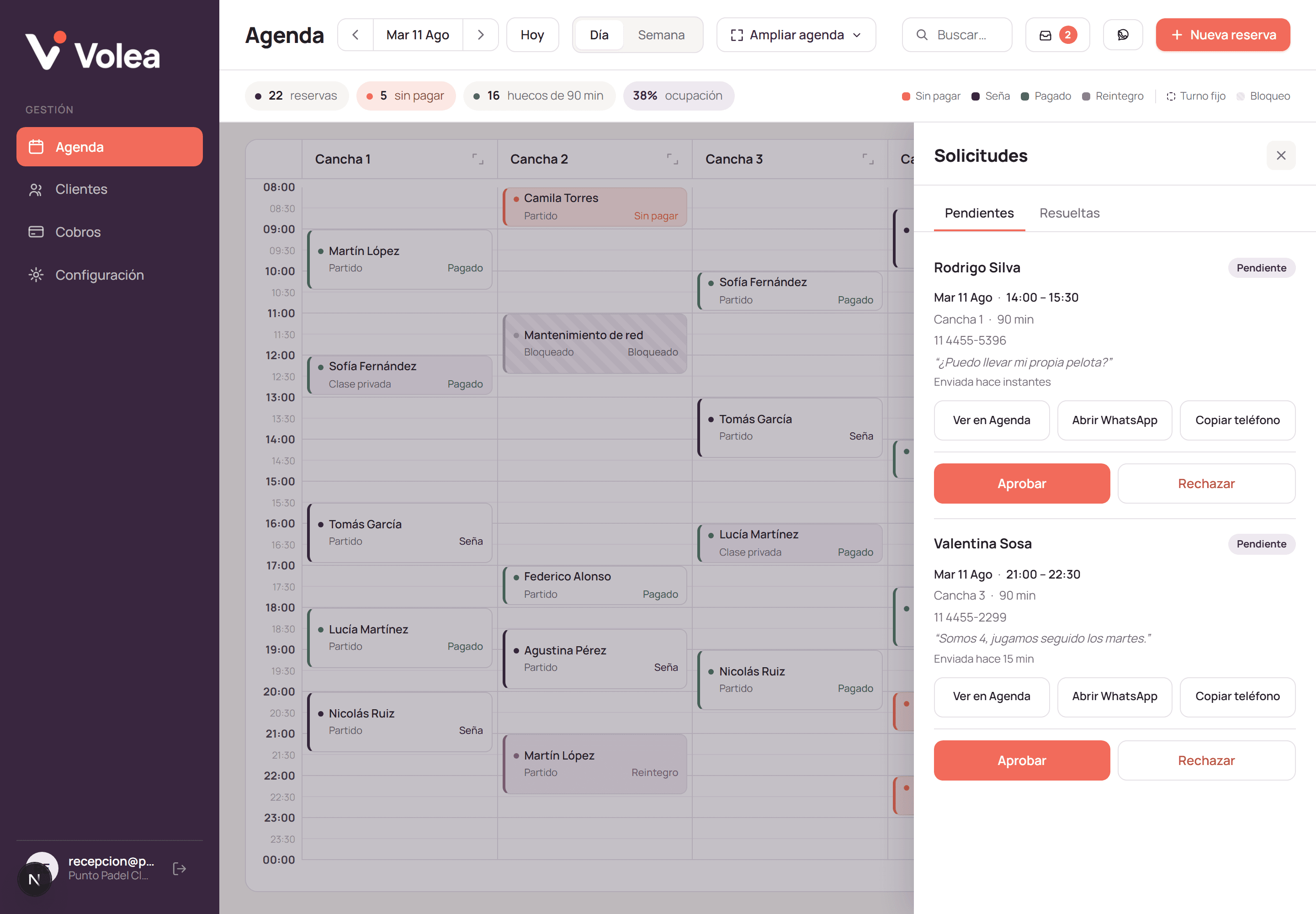
Booking confirmed
Keeping the decision on the club's side
When a player requests a booking, the request lands in the club's admin panel with the information needed to review it and decide.
Front-desk staff can pull up the request's context, contact the player and approve or reject it from the same place where they manage the schedule.
Sharing availability without retyping every time slot
Clubs need to announce open slots often. Instead of forcing them to rebuild that information outside the system, I designed a tool that lets them select availability straight from the schedule and turn it into a message ready to share.
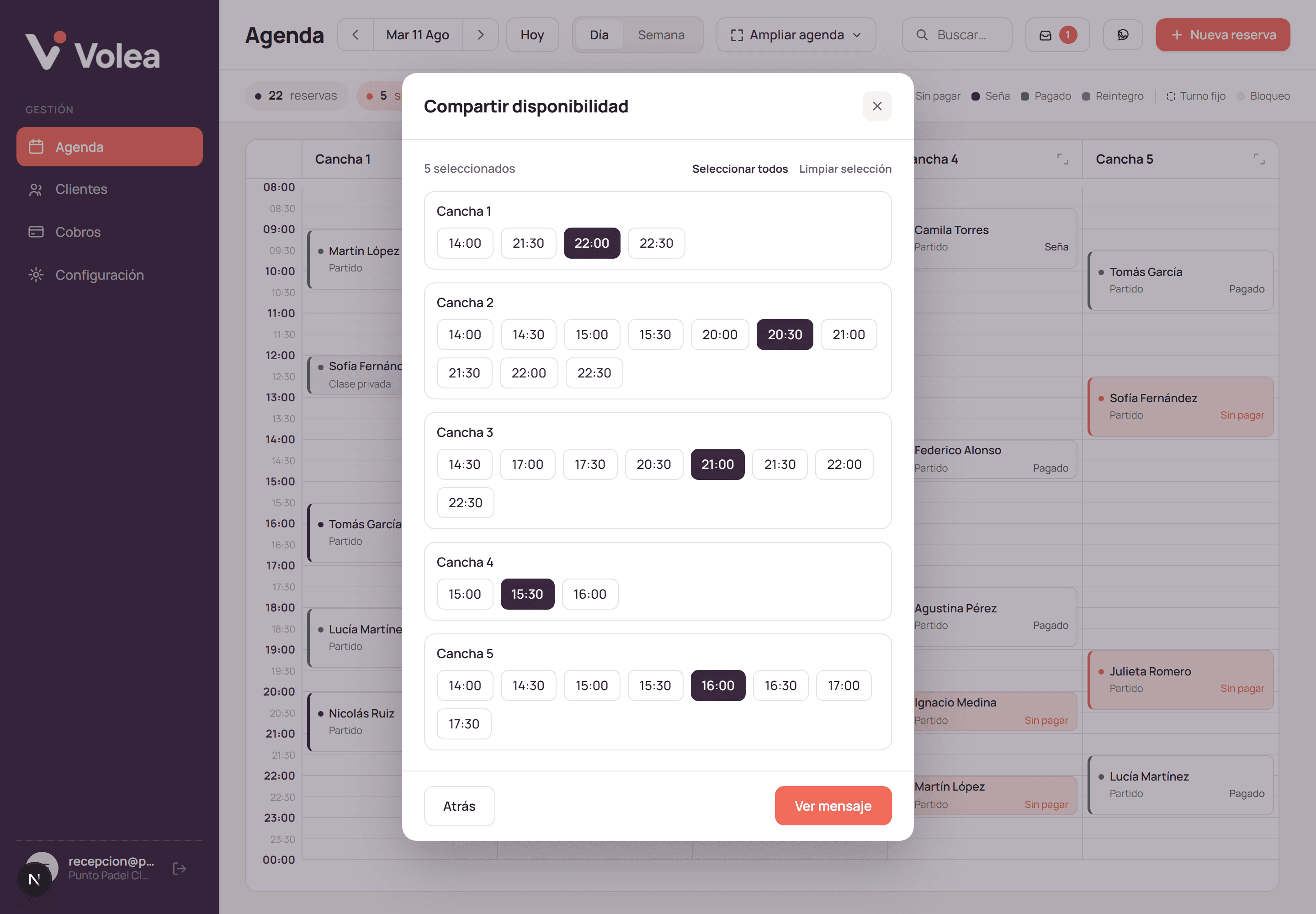
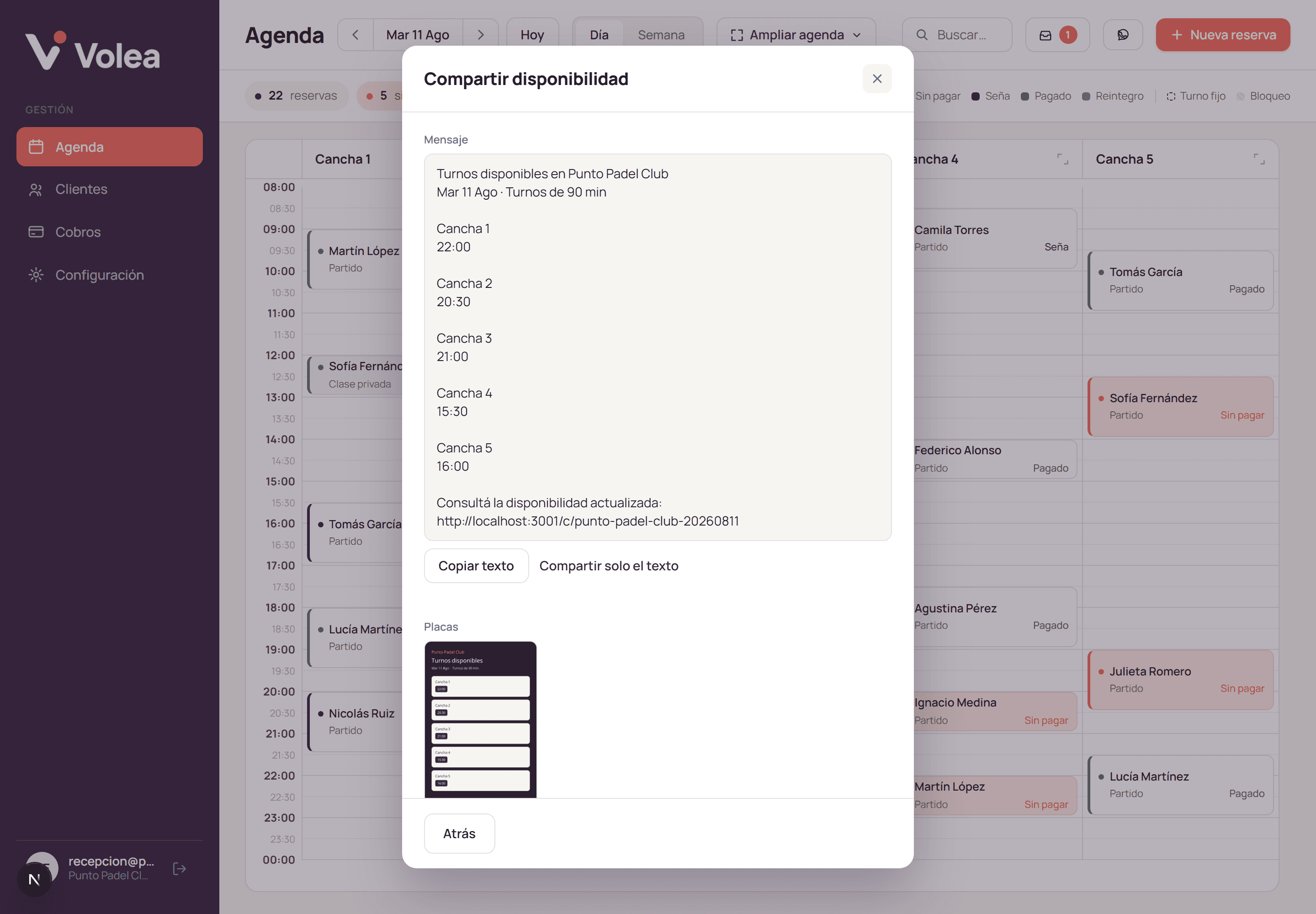
The intention wasn't to replace how clubs communicate, but to reduce the work it takes to do it.
The work didn't stop at a prototype.
Beyond defining the product and designing the experience, I built Volea into a functional MVP through AI-assisted development.
The product today covers schedule and booking management, customers, payments, club settings, public availability and booking requests, among other flows needed to run the first version.
Building it let me evaluate the decisions against a working experience and connect the parts of the system instead of stopping at isolated screens.
A functional MVP still isn't a validated product.
So far, Volea has only been tested by me during development, and it hasn't run inside a club's real operation yet.
The next step is a pilot, to see what happens when owners and front-desk staff use these flows in their everyday work.
Usability
Does the operation stay clear once the club is actually working?
Value
Does Volea improve enough on how clubs manage bookings today?
Business
Which part of the proposition creates enough value to be worth paying for?
Designing less was also a product decision.
Volea moved me from thinking only about what I could build to deciding what was worth building first.
Narrowing the problem to one concrete first proposition turned a broad idea into a working product that can now be put in front of real users and start being validated.